
SolSeraph Review
For god’s sake.

Video games are still in relative infancy compared to other forms of media, so it’s nice to get a reminder of how far they’ve come in that short time. SolSeraph is happy to oblige, resurrecting a rotten corpse of yesteryear, sprucing it up haphazardly with a little makeup and sending it back out into the world, shuffling and groaning.
Though it doesn’t admit as such, SolSeraph is a clear spiritual successor to ActRaiser, one of the earliest games to release on the Super Nintendo. In both games, you play as a god awakening to a world consumed by evil and set about vanquishing demons and rebuilding civilizations left in disarray. Both feature side-scrolling platforming for the former task and world-building simulation for the latter. This dual setup was remarkably innovative in ActRaiser’s day. How well does the concept hold up thirty years later, though? Pretty poorly.
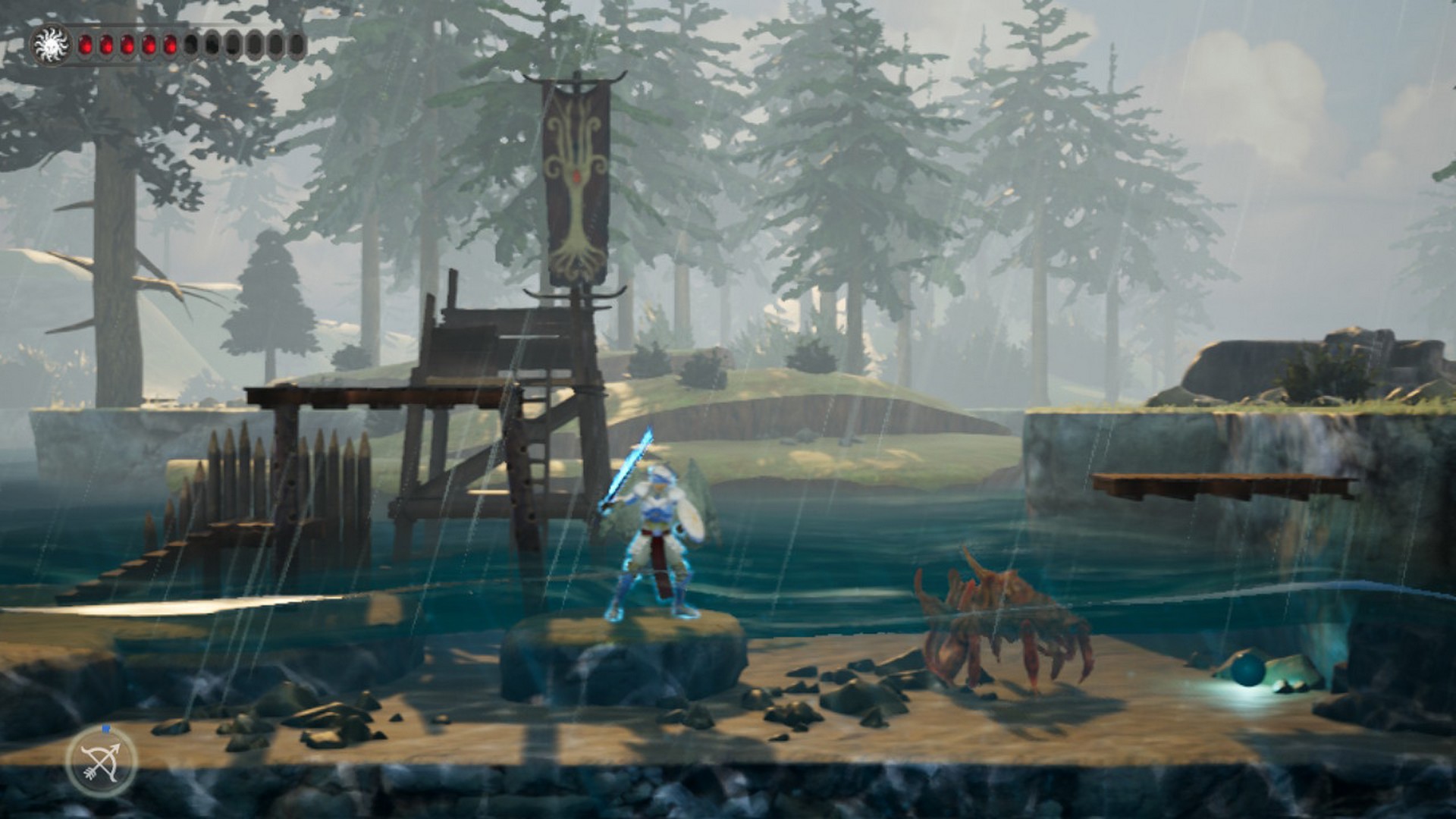
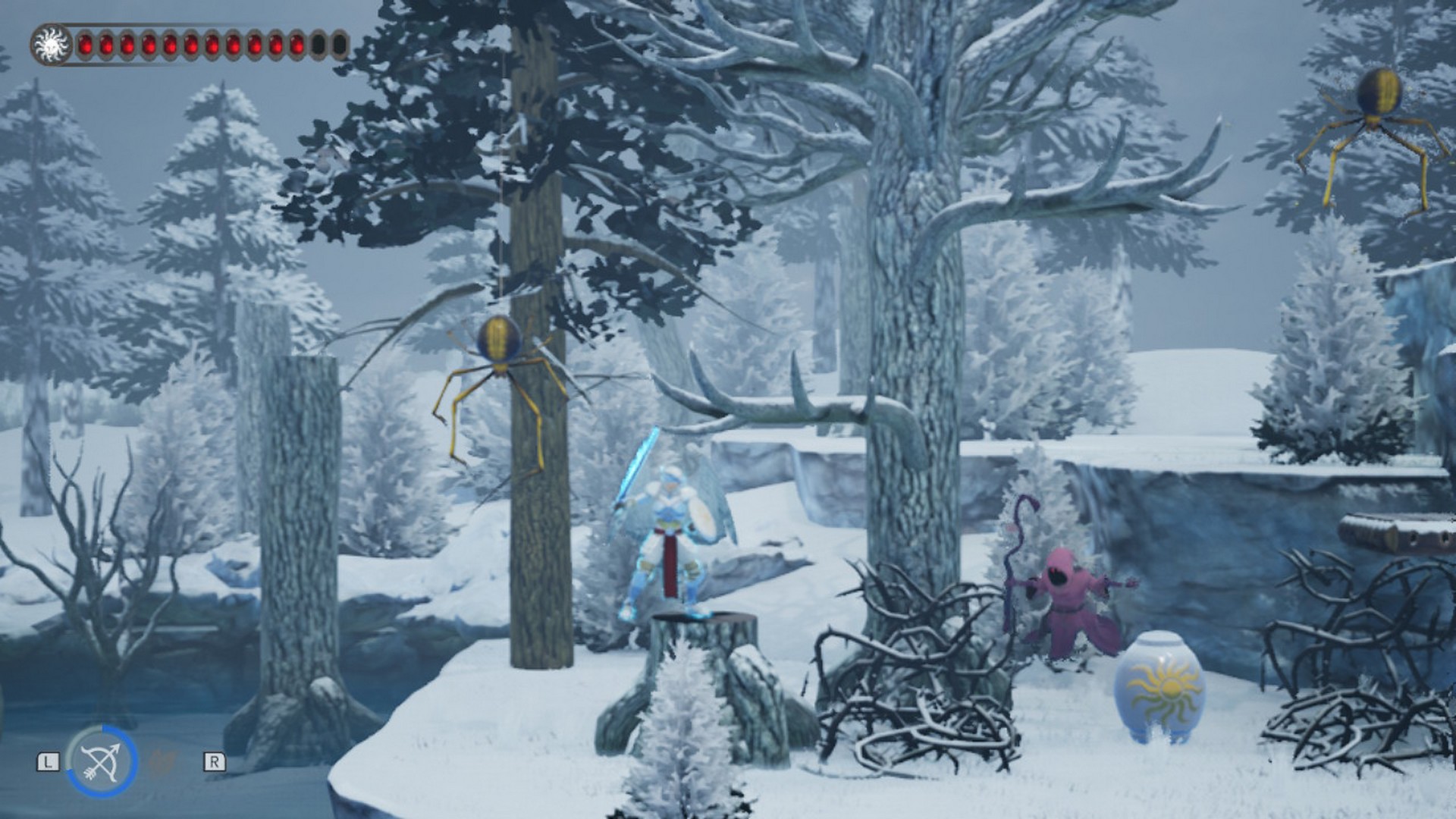
SolSeraph’s faithfulness to its source material is equal parts impressive and baffling. It genuinely feels like a lost relic from generations ago. The side-on platforming sections are linear and rudimentary, with generic fantasy creatures like goblins and wizards to fight along the way. You have basic sword attacks and limited special abilities at your disposal, like arrows and healing. There’s a double jump. And that’s… about it.
With this setup, it was never going to be very inspiring. But being primitive is the least of SolSeraph’s sins. It’s utterly dreadful to play. Movement is clunky and imprecise, leading to frustrating missed jumps and deaths. Enemies spawn in from all directions, their attacks often impossible to predict. Your limited range of movement and a noticeable input latency make it difficult to dodge and line up attacks.
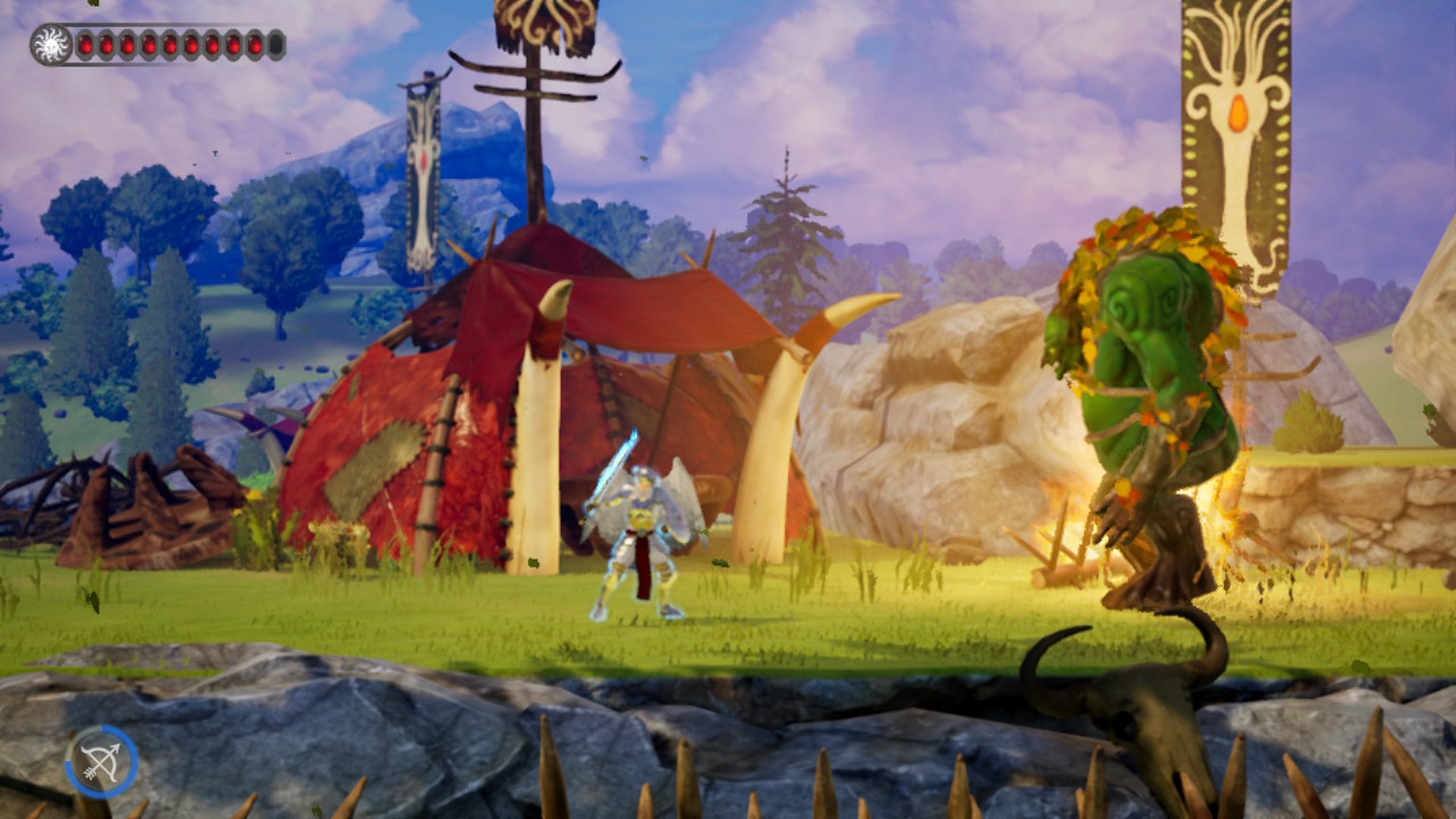
ActRaiser had similar issues, and offset the damage you’d inevitably take by giving the player a lot of health. SolSeraph apes this exactly, with your health pool increasing as you progress so you become a big, dumb damage sponge. Sure, this makes it playable, but as a design choice it’s beyond slovenly.
ActRaiser can be forgiven somewhat due to the fact it released a whole three decades ago. Sweeping strides have since been made in modern action games, particularly in rogue-likes such as Dead Cells – responsive controls, dodge rolls and challenging but fair enemy AI. For SolSeraph to ignore these is inexcusable.
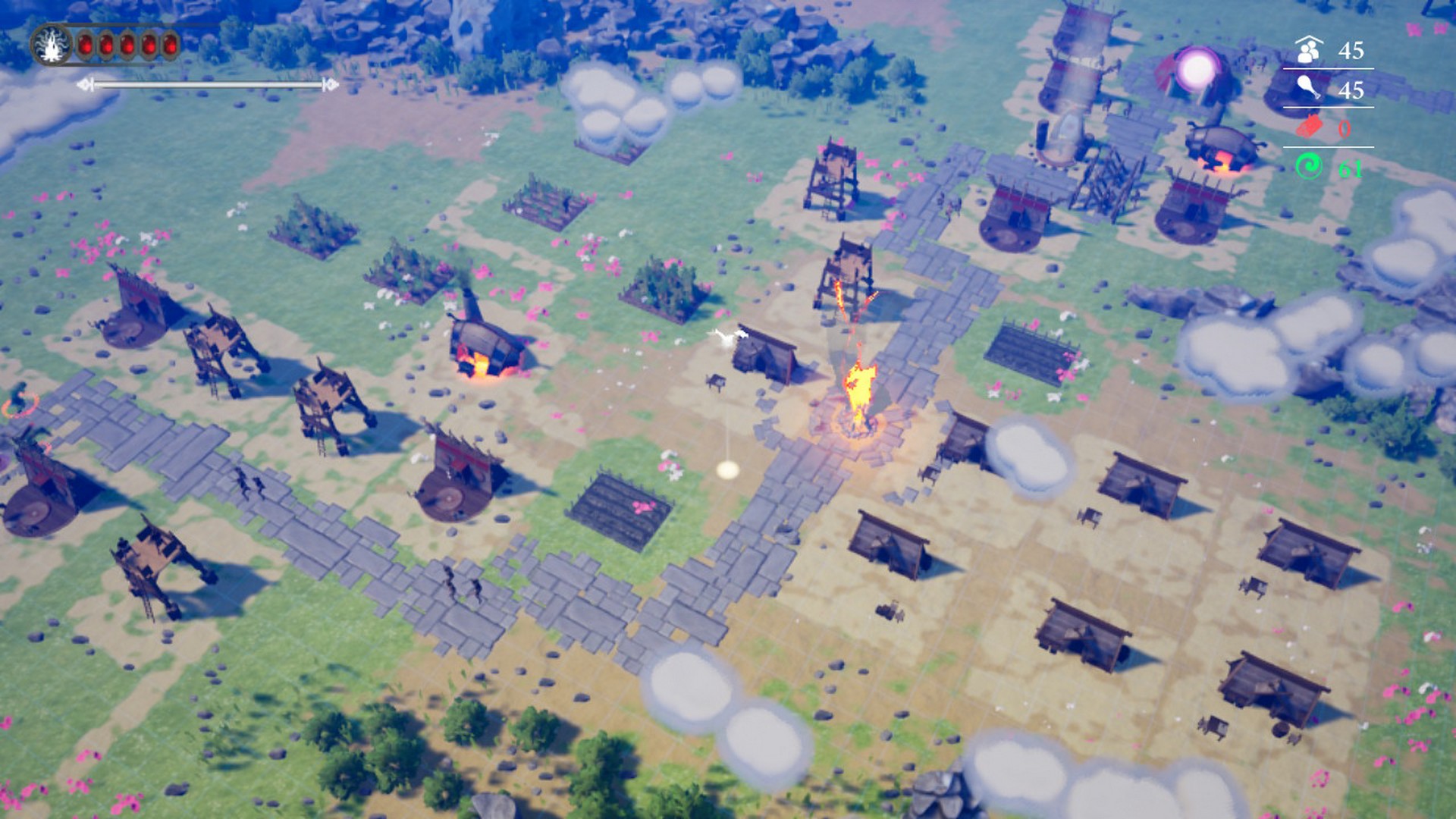
But its platforming is only half of the sad story. SolSeraph is also a god sim, and here it actually makes an effort to bring itself closer into the modern day – albeit with tower defense, a genre that had its heyday ten years ago. Here you rebuild settlements with houses, lumber mills and farms, and protect them with typical defence towers. Waves of monsters emerge from lairs on the map and stroll towards the village – while keeping politely to the path, of course – and soak up the damage from your defenses.
Rather than play as an omnipotent, formless being, you fly around the map to build structures and use godly miracles. This makes it play a little like PixelJunk Monsters, though with only a fraction of the charm. But while it may be dull and uninspired, it works. And it’s undoubtedly the better part of the package, though this isn’t saying much.
I take umbrage with the tower defense gameplay loop, however. As you progress and open up more of the map, you find new monster lairs to fight in platformer mode. But wiping out a lair just opens up another lair and sends even more enemies your way. It feels counter-intuitive.
Destroy the last lair on a map and it unceremoniously tells you as such then leaves you sat there on the finished level. You have to actually exit from the menu before you can progress further in the game. It’s oversights like this which add up to a thoughtless, unrewarding experience.
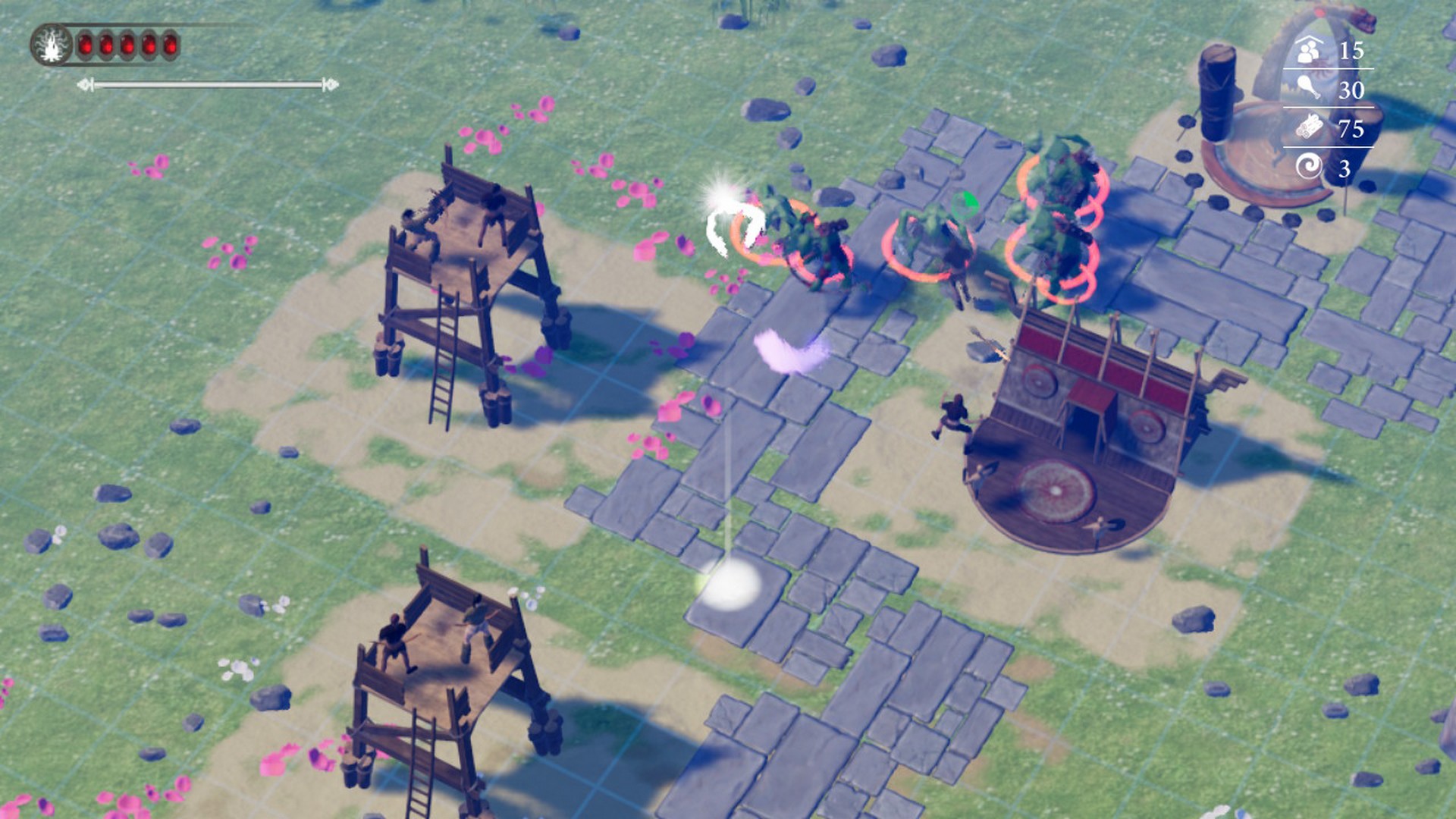
It may come as no surprise to learn SolSeraph’s presentation is mediocre, too. Though I can’t speak for the PC version, it looks blurry and low-res on Switch. Even the protagonist looks like vaseline has been smeared over the screen in front of him. In spite of this, the frame rate is still pretty rubbish, regularly feeling lower than 30FPS. My favourite element, however, is the generic fantasy soundtrack that repeats jarringly with no effort to make a seamless loop.
SolSeraph is the worst type of retro throwback, the kind that fails to evoke any misty-eyed nostalgia and makes you grateful that modern games exist. Frustrating, stale and slipshod in execution, its ideas should have stayed buried deep in the past.
[Reviewed on Switch]