
Paranoia: Happiness is Mandatory Review
Far from mandatory.
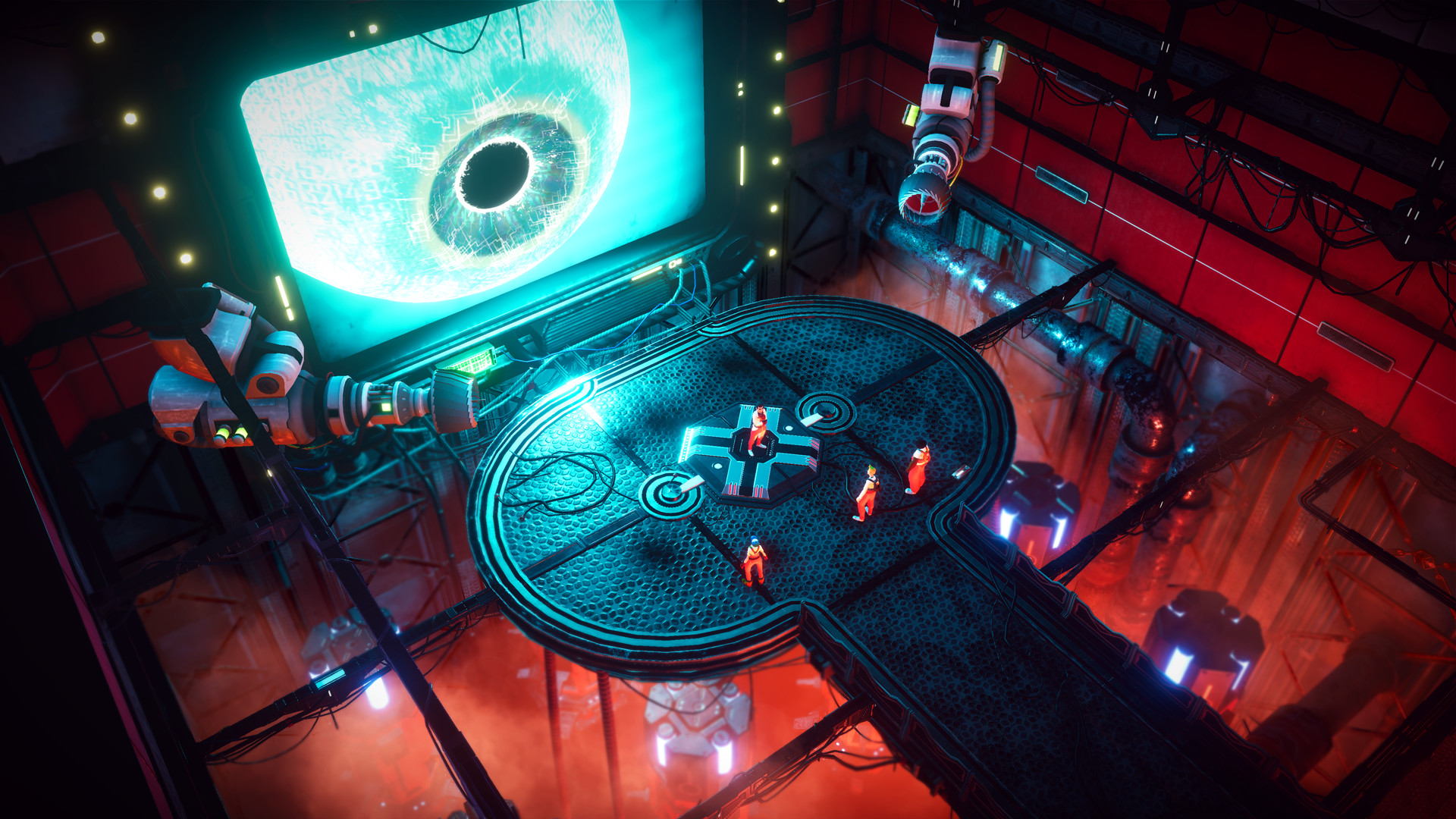
Paranoia, or to give it its full title, Paranoia: Happiness Is Mandatory, is a dystopian game about taking risks that pretty much plays it safe.
Is there a more established sci-fi trope than the dystopian all-seeing-eye police state where emotions are regulated by mandatory drugs? Possibly. But it is certainly one that has been done many, many times. That’s not to say the idea has run its course, as there is a wealth of potential sitting beneath the surface, just so long as you introduce enough individuality. Has Paranoia done that? Well, yes and no.
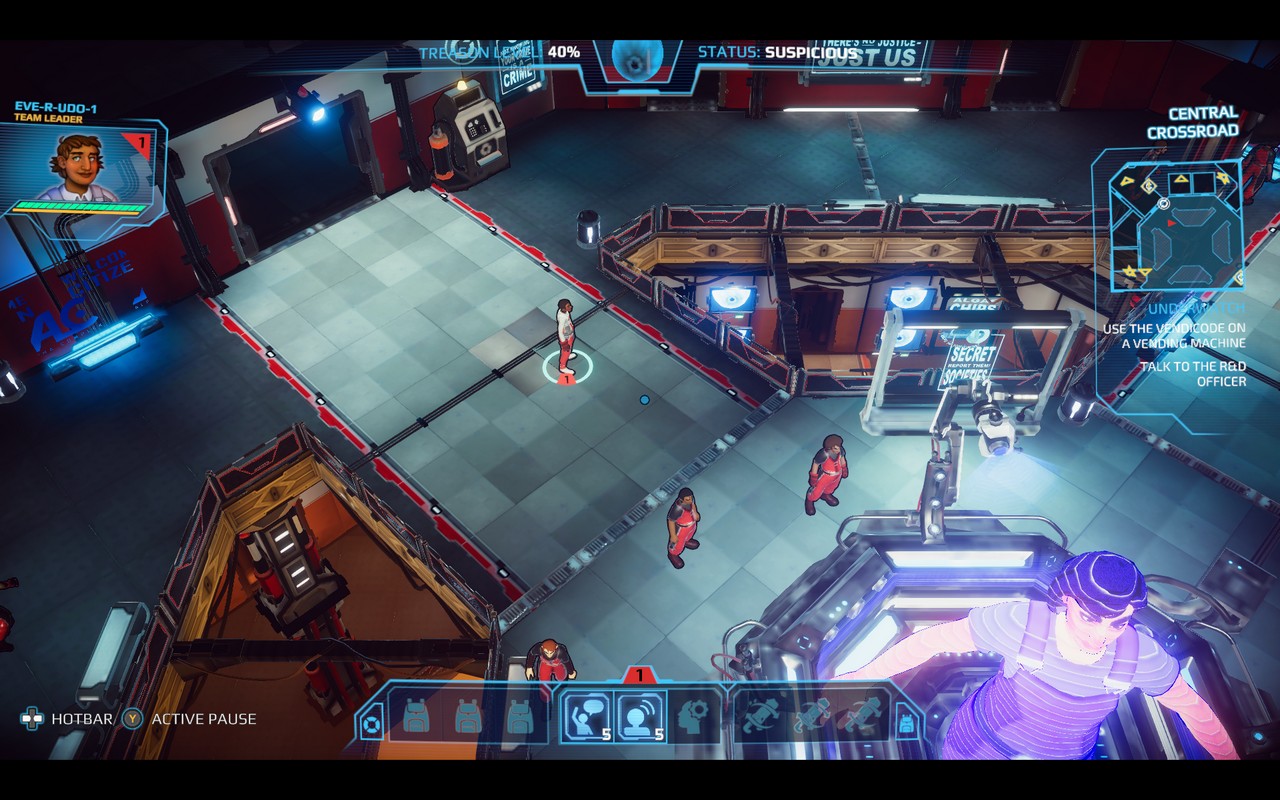
Based on a well-established board game, Paranoia already has its universe ready and waiting. You take the role of a Troubleshooter, directing your team of clones through a series of challenges and quests. The map is colour coded with areas you can and cannot enter, creating a class system that fits neatly within the classic trope of ‘untouchables’ vs the elite. You are kind of a lower-middle status employee, and as such you have very little say over anything. You are given tasks and expected to display happiness and willingness throughout. A good, solid set up.
Or it would be, if it didn’t feel so hollow. Although you wake up in this world and the lore is laid out for you, it never really feels established. The thin veneer of a tabletop game has not translated as well as one would have hoped, and the narrative falls flat. Satire is attempted but maybe should have been left alone, as its never abundantly clear what you are laughing at.

The RPG elements are in danger of seriously overhyping themselves as well, as the majority of conversations are a button mash to the finish. There is very little attention paid to branching dialogue or relationship options, as one would expect from such a game – aside from making your character occasionally choose between very binary options. Given the situation the world puts you in, when asked how you feel, you will be given the equivalent of:
Say: “Yes I am fine thank you, benevolent leader.”
Say: “No you massive cretin, this entire set up is a sham and I hate you.”
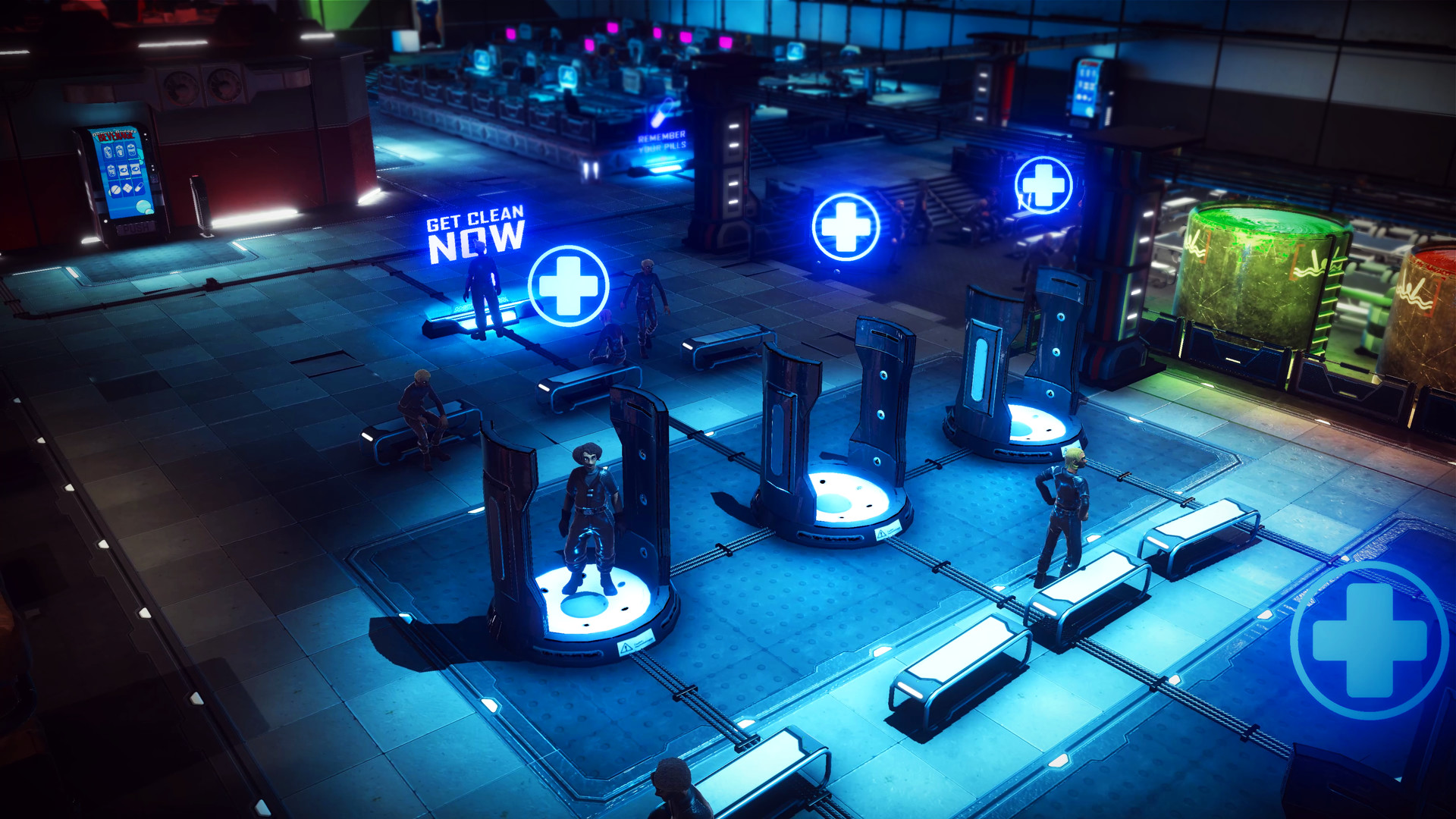
Whenever there is a plot point or task, 90% of the time it will be a fetch quest. If you enjoy fetch quests, knock yourself out, but I expected more from a game that was touting itself as an RPG. You will spend most of your time running around the map – struggling to use the camera system and accidentally trespassing. This is the sad fate of many tabletop-to-video-game set-ups, in that the concepts and challenges just aren’t strong enough to carry the story through this less niche medium of high expectations.
The other main criticism is that the environment you are supposed to rail against is almost a meme of itself. There’s a big creepy eye that tells you what to do, but it doesn’t feel like enough of a rich tapestry to pull off the level of fakedeep nonsense that goes with it. Even your guidebook is a mangled conceptual mess. Half the time it will appear self-aware, giving sly comments to reveal things the overlords don’t want you to know, and then the rest of the time will just straight-up tell you what you need to know, in a way that doesn’t fit within the supposedly censored remit of the society one bit.

It’s not particularly creative, and certainly not as clever as it thinks it is, but Paranoia does have some redeeming features. It’s not an unattractive game, and although it’s not particularly pretty either, there are elements of it that do give you the odd chuckle, or offer a slice of potential. It is also pretty easy to navigate, and has an interesting method of continuing from a savepoint, in that you spawn clones as canon. The power-ups and skills system is effective, and it’s nice being able to experiment with more than just standard weapons through the system of mutations.
Saying that, actual combat is clunky at best, and suffers from an over-complication of what should be a simple point-and-shoot. Fortunately, your team are responsive, and you get a good chance to play around with your gear with the pause function (that I suggest turning on before playing). This way, whenever someone takes aim at you, you’ve got the chance to cycle through the fiddly controls and plan something destructive, rather than face instant incineration.
The concept seemed safe enough, but by making the lore so vague, the dialogue and RPG elements so weak, and the combat too clumsy, Paranoia hasn’t lived up to expectations. With a name so blunt you’d be expecting to feel chills, to be looking over your shoulder, to thrive for triumph over an oppressive system that you fundamentally disagree with. Paranoia does none of this, and instead offers up a diluted, animated version of their table-top success. There’s a joke in there somewhere regarding board games/bored games, but so powerful is the ennui I’ll let you figure that one out for yourselves.
[Reviewed on PC]