
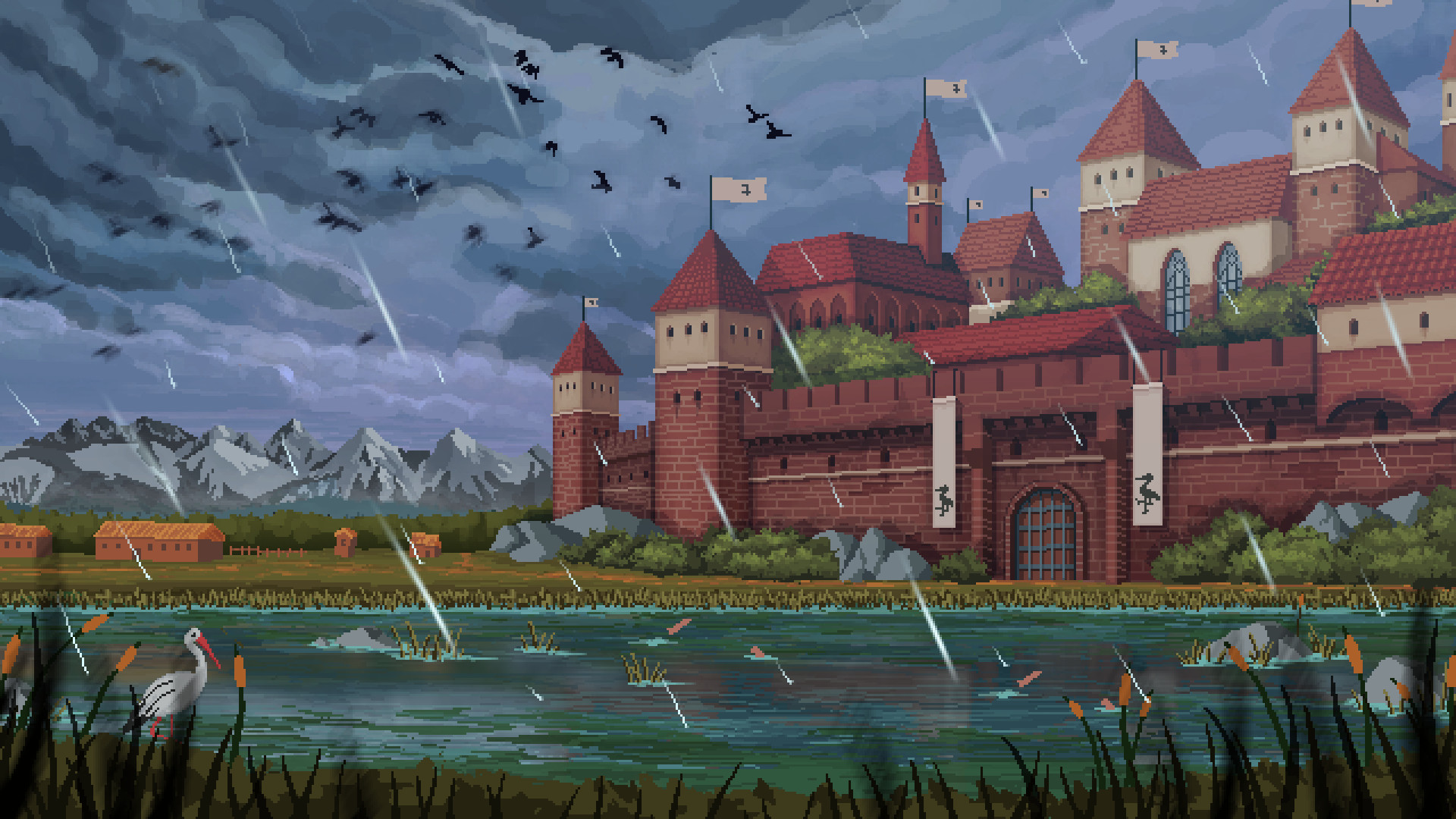
Yes, Your Grace Triumphs Over Its Perilous Beginnings – Preview
A story of struggle and triumph, and the game that came out of it.
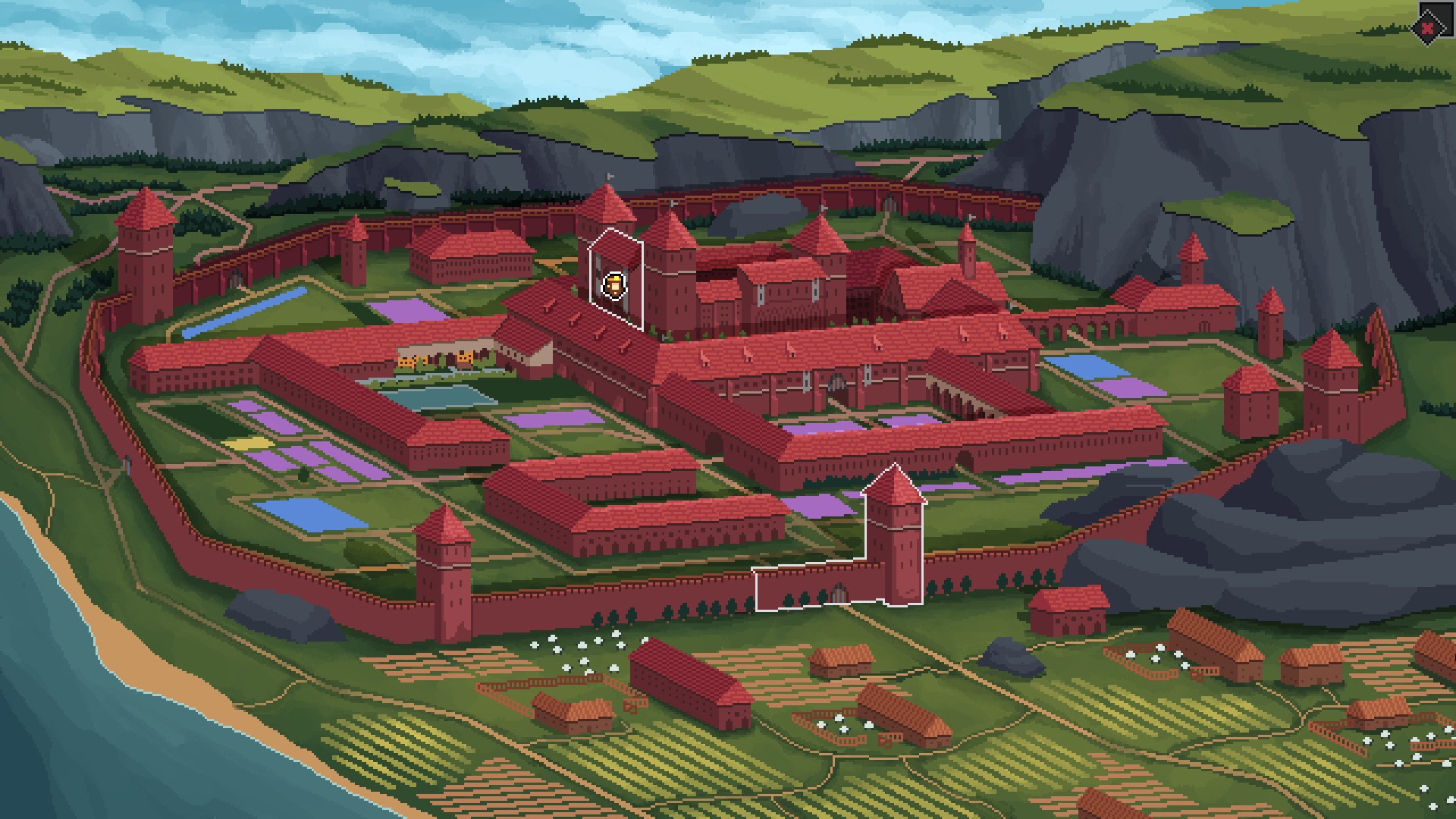
It’s been a tough journey for Rafal Bryks of dev studio Brave at Night. After successfully pitching Yes, Your Grace to the Kickstarter public way back in the November of 2014, progress on the game stalled as an early partner left. Then, the game was signed with a publisher promising programming help which ultimately didn’t manifest. What followed was a few years of getting the rights back from the publisher whilst working a full-time job. All of this under the pressure of delivering to Kickstarter backers.
The pressure that must have mounted on the developer doesn’t feel too at odds with the plight of Yes, Your Grace’s protagonist King Eryk of Davern. With citizens to help and a rampaging army to stop, there’s a sense of impending doom that feels like it could mirror the feelings of Rafal in those most difficult moments. Having been one of the original Kickstarter backers in 2014 it’s a delight to see the game resurface again with a release date of early 2020.
A lot has been scaled back since the original pitch in 2014, of full-blown RPG systems and a sweeping campaign. But what remains feels laser-focused on the story it wants to tell and the player’s place within it. It’s a kingdom management game where you play the King listening to petitions from citizens which range from the mundane – investing in a new tavern – to making allies with neighbouring kingdoms.
The difficulty is that the kingdom of Davern has seen better days and it’s quite light on resources. So you must choose how to distribute food and gold to the petitioners. It’s a matter of treading a careful balance between saying yes to things that will make the populace happy and increase the kingdom’s coffers, and no to the potentially disingenuous individuals chancing their arm. Petitioners line up every week and resources are divided between gold, food, army strength and population happiness. It’s a precarious tightrope the player must walk, not unlike in Reigns: Her Majesty or Long Live the Queen which place the player in similar decisive roles.
But it’s not just petitioners that stretch your resources but narrative demands from weddings to invasions. The resources available to the player in the demo are tightly controlled and one too many investments in the good people of your kingdom can leave the treasury ill-equipped to deal with more pressing concerns. It captures the feeling well of this financially despairing castle, of just about scraping by at any one time. It’s an economic position within the game which creates tension. And a narrative position which evokes great sympathy.
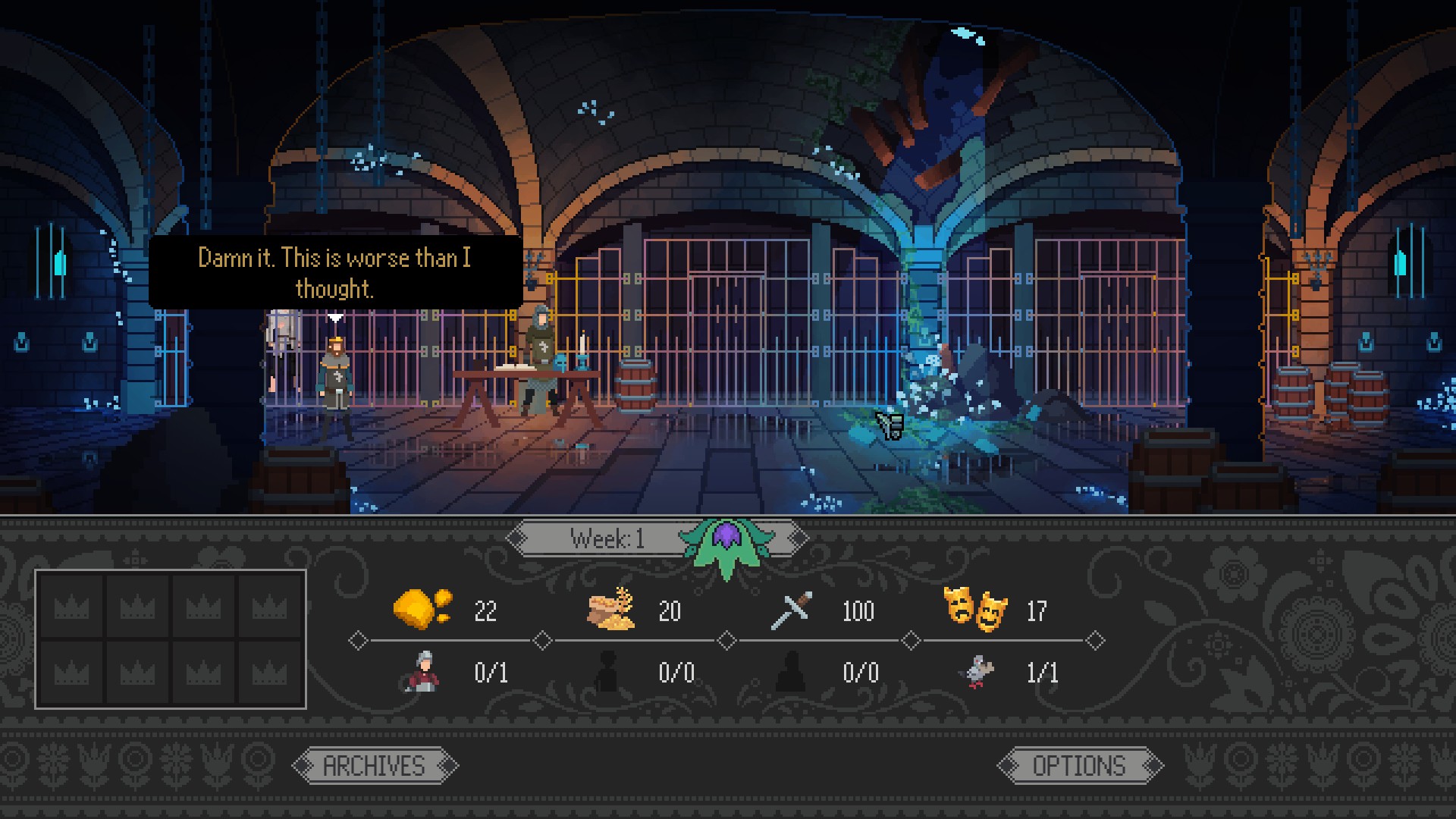
As enjoyable as the tightrope might be, the demo performed an excellent job in hooking my interest in the story of the game. You start not at the beginning but at a foreboding end where an invading army is about to assault the castle. But this narrative position also doubles well as a tutorial. Sitting alone in the throne room, it’s eerily deserted at night until someone comes to tell King Eryk that ‘it’s time.’ With this sense of foreboding, each action carries with it an added weight of dread. Actions are performed slowly so that the player can get used to them.
It sounds mundane to talk about a tutorial within a demo but given how several large games don’t give adequate tutorials (looking at you Monster Hunter: World), so much information can get lost. It’s nice to see a smaller game focus on introducing core concepts through a compelling narrative hook.
From this foreboding future, the demo snaps back to a year prior where the game really begins. It’s from here that we are introduced to the interesting, vibrant characters who make up Yes, Your Grace. Aside from your advisor and potential allies the people you interact with most are King Eryk’s wife and three daughters. And like all good families, they are the primary source of stress and frustration.
After a long day of petitions, Eryk can then visit individual members of his family: conversing, playing games and talking about their futures. It’s this grounded narrative perspective which offers an engaging and unique play experience with the management sim. Decisions like withholding money from the peasantry thus take on new meaning when you’re saving for a lavish wedding for one of Eryk’s daughters.
The tension of that kind of decision pulls the player in so many interesting directions: is it not the duty of the ruling class to look after the poorest of citizens? Is it not the duty of a parent to provide for their children? Why should one family decide how the rest of the populace lives? Brave at Night have found such a compelling frame to explore these questions.
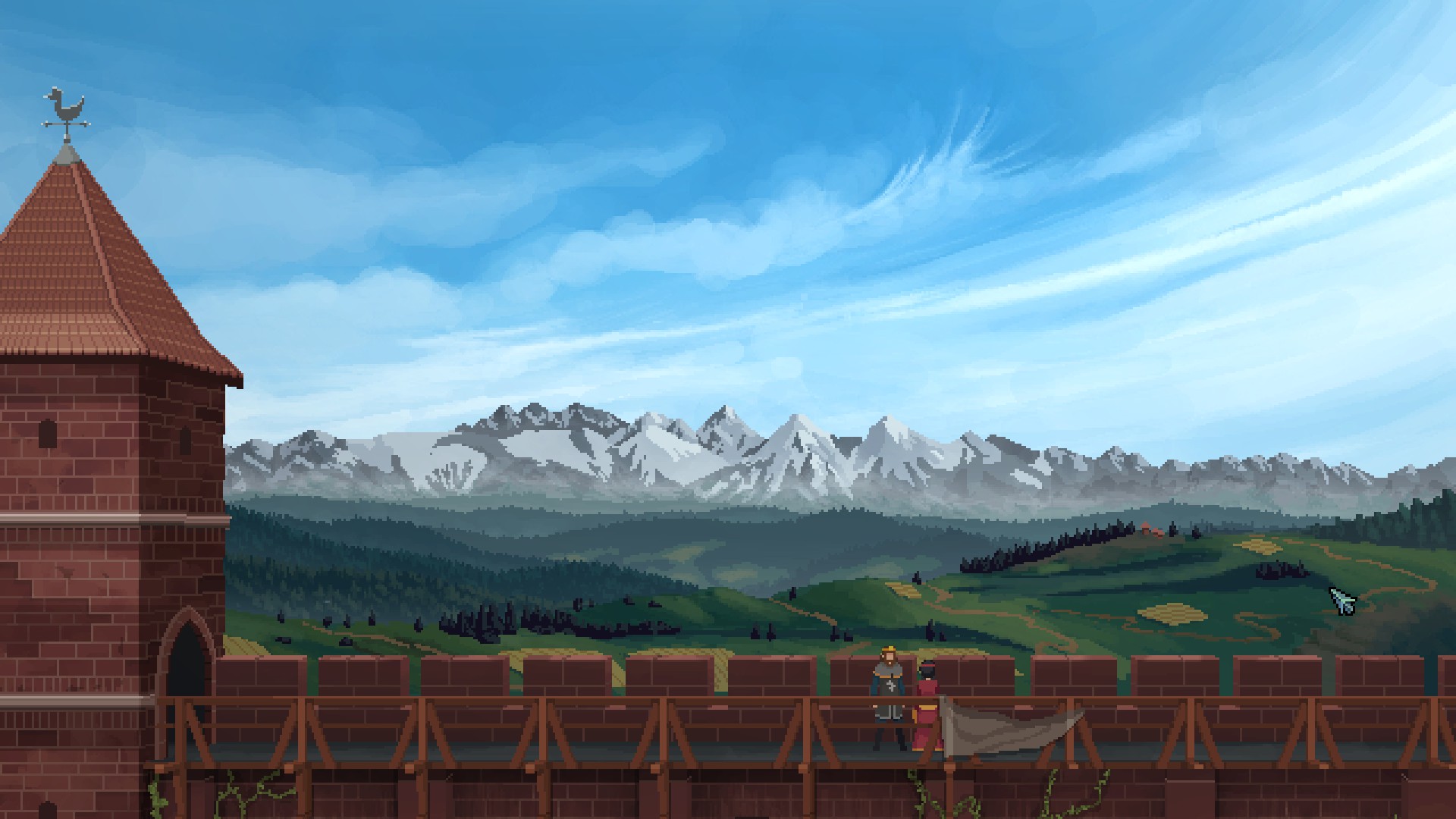
Such a close bond is struck through the dialogue that there are some moments where a certain word here or there seems jarring when ending conversations with family members. That is a very particular nitpick but it speaks to the good writing work that something can stick out like that. But even beyond that, the pixel art aesthetic has grown in leaps and bounds since the original Kickstarter with subtle details in the throne room communicating how this castle has seen better days.
There is one location, though, which deserves a special mention. At the start of the game as Eryk looks over the castle walls, there is nothing but a throng of invading barbarians, their torchlights numbering in the thousands. When visiting the castle walls a year before, the UI drifts away to show this serene landscape of fields and mountains in full. Through the quiet and stillness, the tragedy laying ahead screams out at the player, guiding every action against that fate.