

Ultreia Review
When I was a kid I had a children’s Bible that my dad would read to me, with pictures of Adam and Eve, the failed tower of Babylon, and Delilah cutting Samson’s hair. I absorbed these stories like a sponge; there was always a clear moral about choosing kindness over everything, but I was always really more into the pictures.
That’s my experience with Ultreia, a point-and-click adventure that follows a robot named Nymo, an adorable can-shaped robot with a bloodthirsty need to exact revenge on his father’s murderer. In order to find the man who murdered him, he sets out on a pilgrimage to the planet Ultreia for answers.
While the game is beautiful visually, the story doesn’t push itself as far as it could. Puzzles are fairly straightforward and satisfying, with its main attraction spending time in its muted dystopian setting.
A Dark and Beautiful World
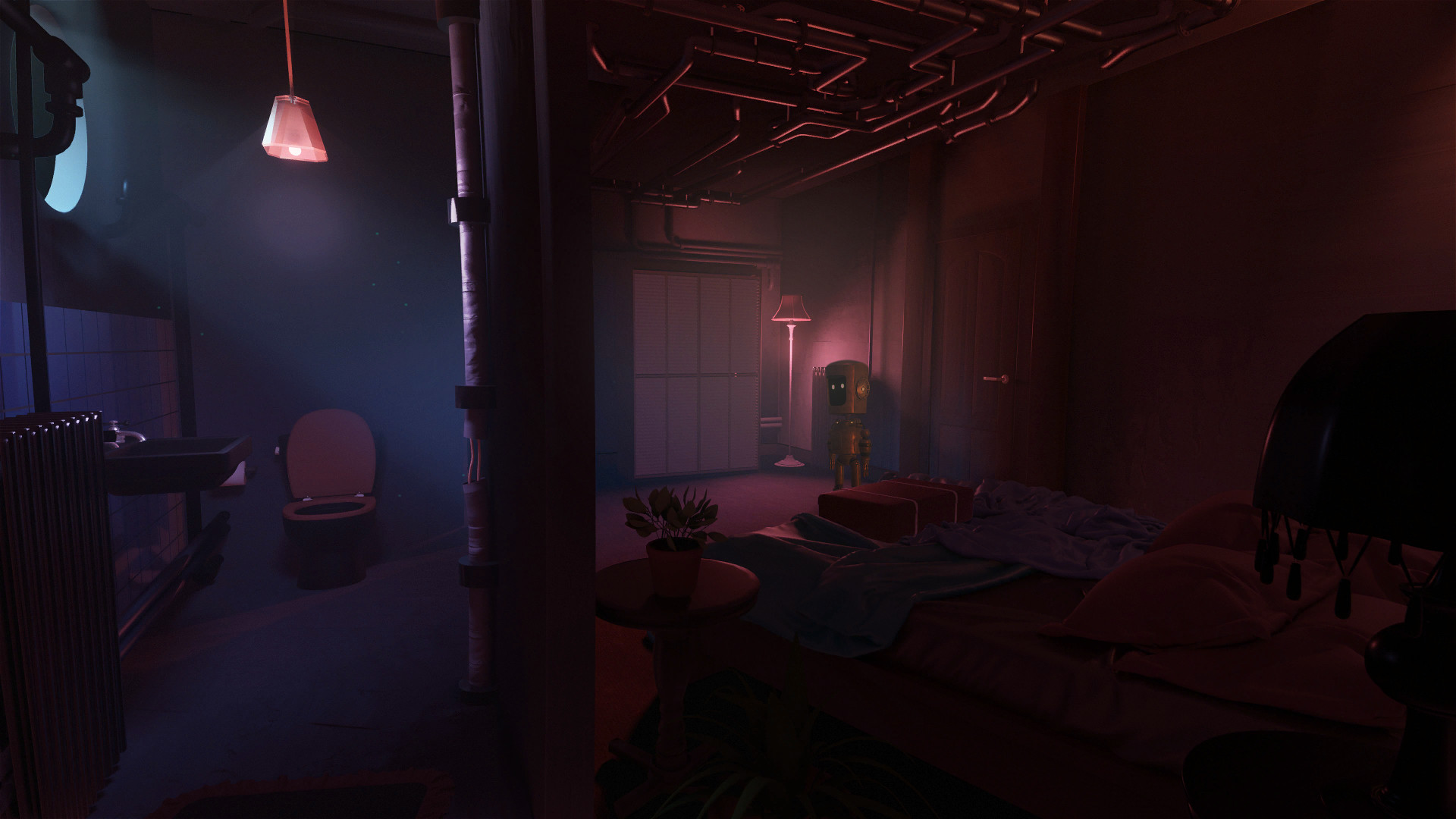
Set in a post-apocalyptic world inhabited by robots, Ultreia looks both beautiful and haunting, from wiry robot birds taking flight, to machines still shambling along though they have been stripped to their bare parts. In stark contrast is the cute and shiny Nymo to the dark and seedy world he’s living in. The character designs for the robots are varied, with some resembling animals like mechanical octopuses and others sleek and human-like, and each one has its own unique voice clips, which is a nice touch that brings each individual character to life. Even in its dreariness, the world manages to have hints of lively charm.
Interacting with the game is easy, especially with the highlight feature which allows you to light up anything on screen that is interactable. This is great for me since I always feel like I miss pieces I need to complete puzzles in point-and-clicks, so it was nice to have that peace of mind. Ultreia also feels very streamlined in ways that older point-and-clicks may feel clunky. For example, they give you a mini-map and the ability to fast travel, particularly through the last and largest level of the game, which made the final puzzles much more enjoyable since I didn’t have to traverse manually.
The Cycle of Violence
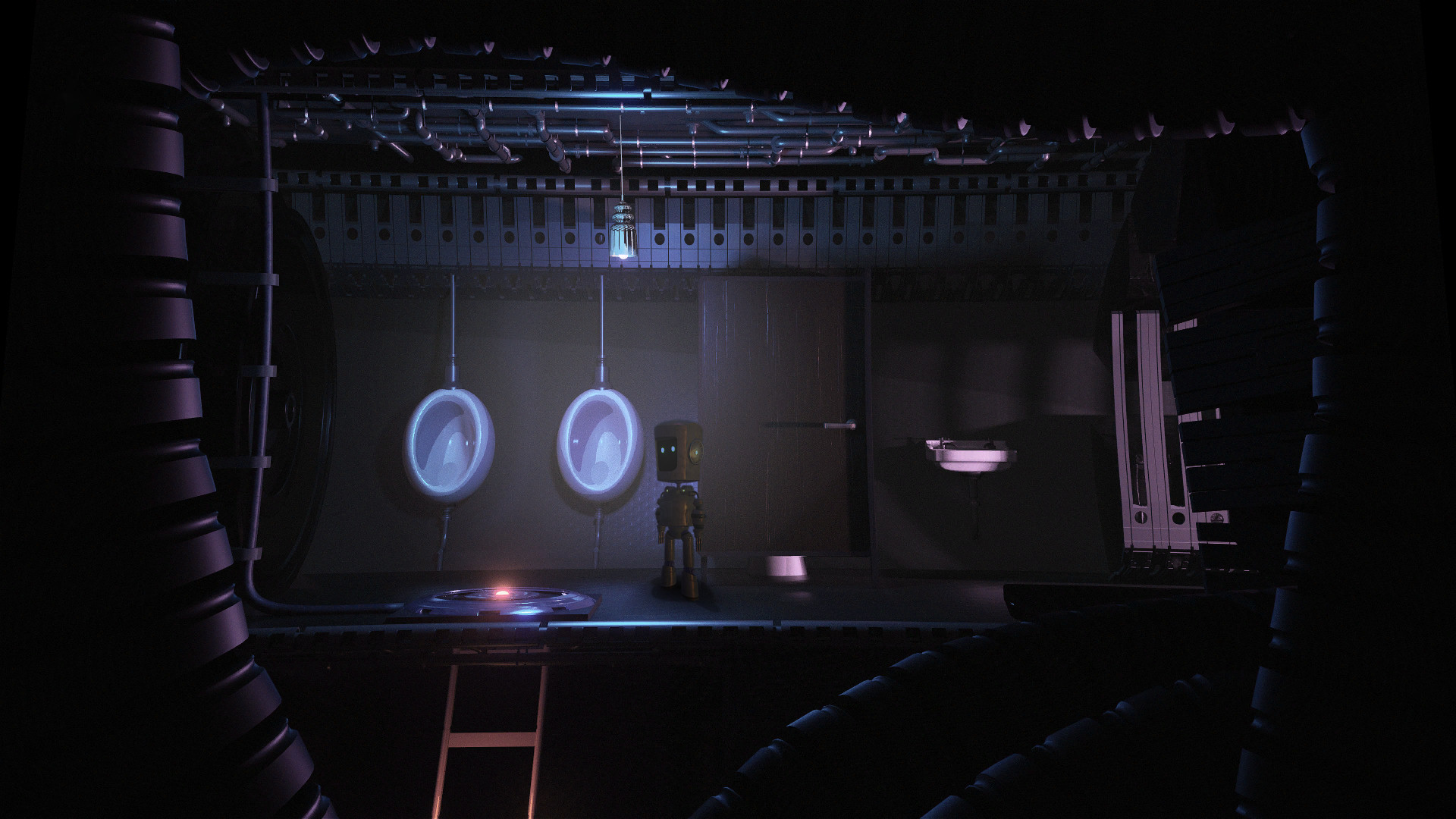
Ultreia focuses on the cycle of violence and the consequences of being involved in its senselessness. In this world, an apocalypse wiped out almost all organic lifeforms, as it becomes solely inhabited by robots. But this new robotic world isn’t a perfect one. Instead of the well-oiled machines they were supposed to be, the robots seem to have the same vices that humans do, compelled to commit crimes and murder. The world of Ultreia thus becomes a warped mirror of our own, which is partially why I wish the story went further than it did.
Ultreia doesn’t shy away from portraying all kinds of violence such as physical, emotional and internal, but only blithely suggests the breaking of this cycle as a solution, without giving solace to the other kinds of suffering presented in the game. Throughout the story, Nymo is guided by a voice in his head that asks him to seek forgiveness over revenge. It attempts to impart the lesson of the pointlessness of revenge, but is too shallow to offer a satisfying resolution to Ultreia’s cruel world.
Ultreia, too, leans heavily on religious themes, with forgiveness being a saving grace that unlocks a secret true ending, reducing the story into an uncomplicated, religious tale with robots rather than a more nuanced story about adversities. It’s a pity that it ultimately misses the opportunities to delve deeper into the rich world it’s built for itself.