
Darksiders Genesis Review
Darksiders reborn?
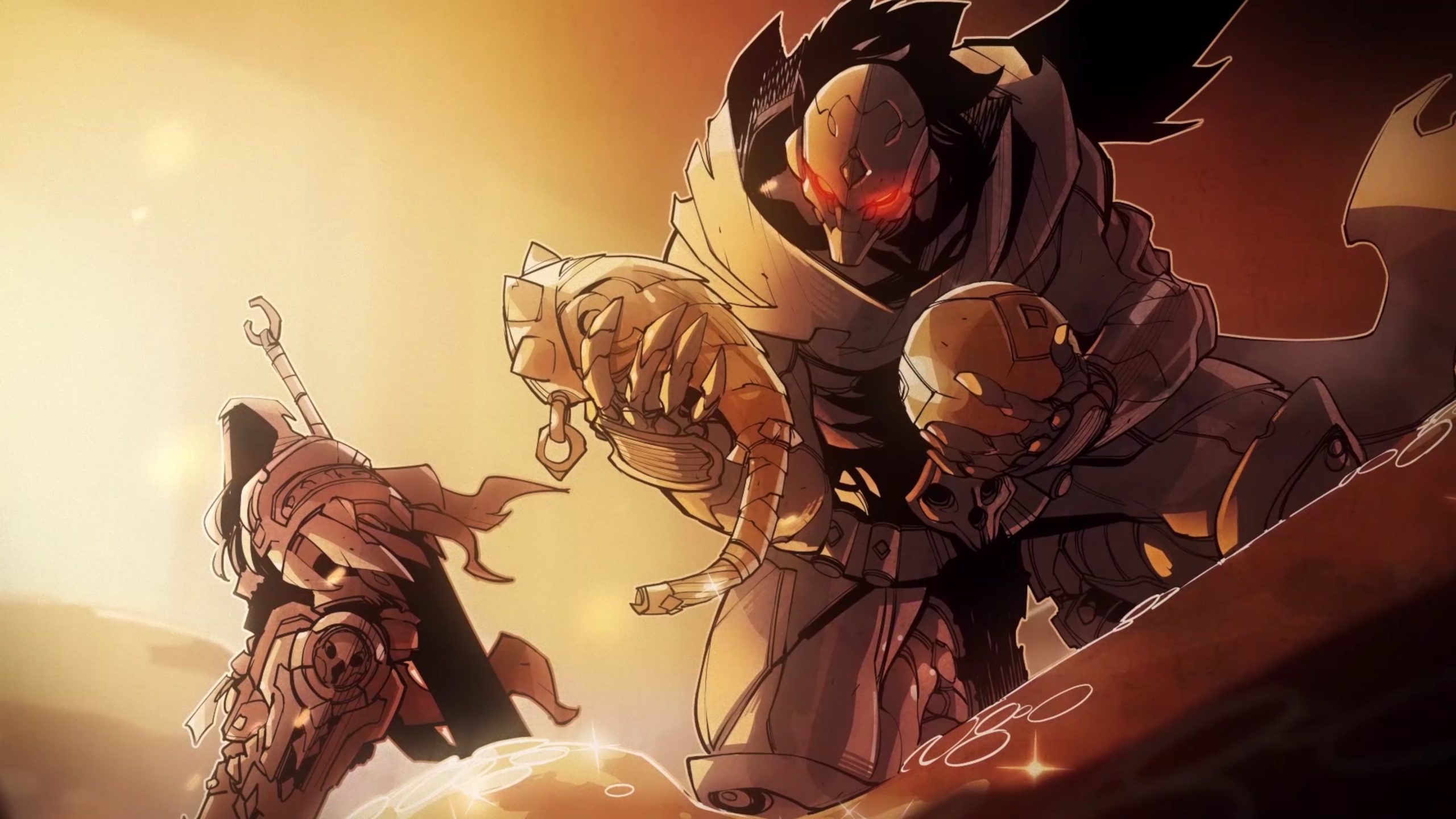
Darksiders Genesis places you in the heavy metal boots of Strife and War. These two are half of the Horsemen working for The Council to maintain balance across all of existence. They’re Nephilim, which means they’re born out of the kinky Romeo and Juliet-esque biblical relations of both demons and angels.
They’re also the only ones left of their kind, as they’ve just murdered all of the other Nephilim after they were ordered to do so by The Council. It’s not what you expect when starting a new job; you usually just have to remember people’s coffee orders, but hey, we aren’t all supernatural beings.
You see, Darksiders Genesis is a prequel (hence the name Genesis) to the Darksiders series, and it helps to give a bit more of a backstory to the brooding War who you play as in the first game. It also serves to introduce us to the gunslinging Strife, who is the only one of the Horsemen we’ve yet to get a chance to play as. While War remains the heavy-hitting melee fighter we’ve all come to know and love, Strife is a vastly different character.
War is stoic and solemn, entirely single-minded in his focus on their objectives. Strife, on the other hand, is a lot more light-hearted, he takes jabs at his overly serious fellow Horseman whenever he gets chance, and it helps to keep the tone of the game feeling surprisingly cheery — especially as so much of it has you facing off against demonic or angelic foes.
The writing is actually pretty good for the most part, the characters are interesting, and the chatter between War and Strife never becomes grating, which is something many other games suffer from. On top of that, the voice acting is also quite strong. While many of the voices don’t always fit the vessel from which they come forth, it’s fun in its own way.
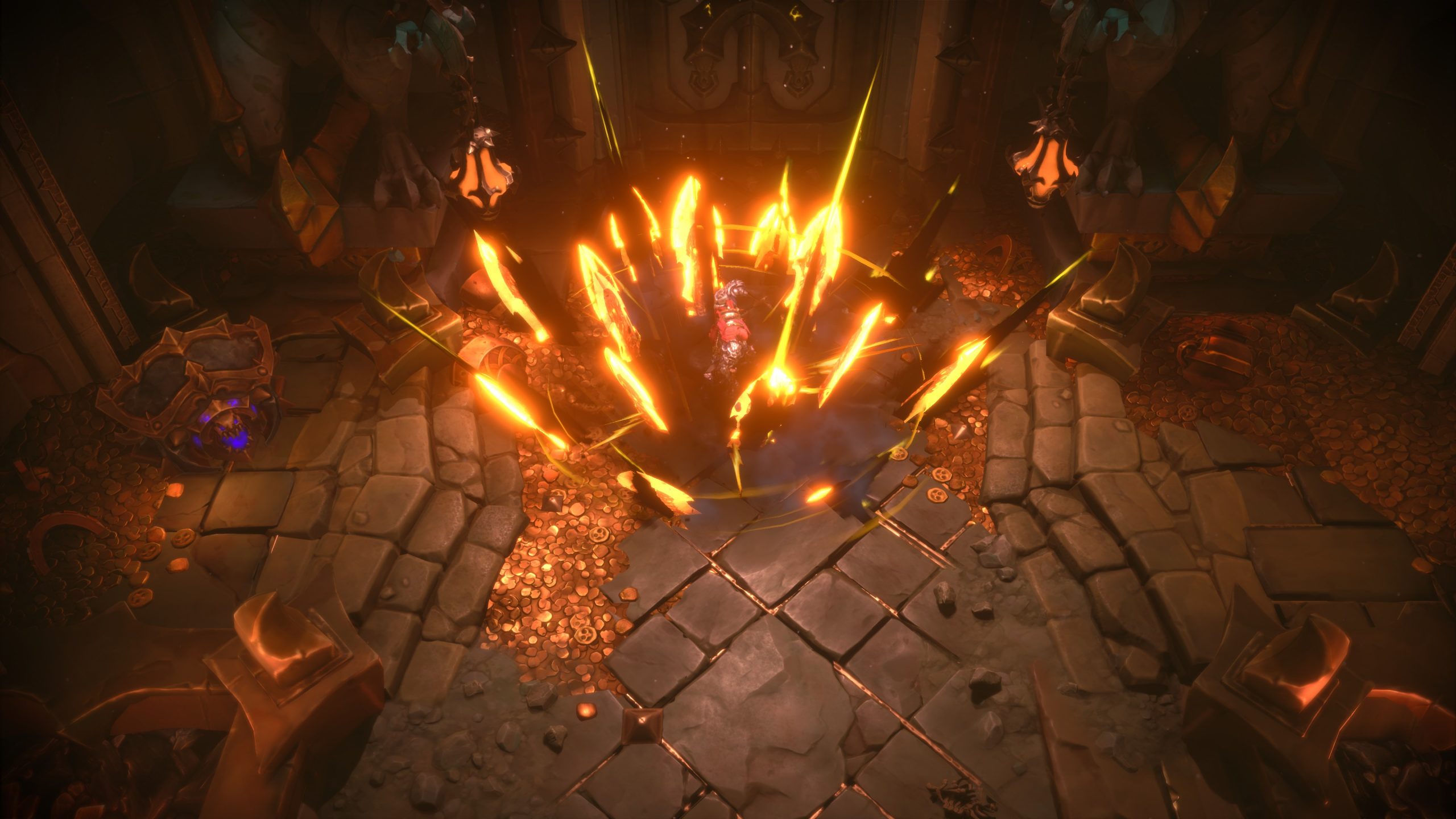
Of course, the main thing with any action game is the gameplay itself, and there’s good news: it’s excellent — most of the time. The new isometric viewpoint takes a bit of time to get used to, but the potential for co-op certainly adds a new layer to the game. The combat manages to be as visceral as ever, with the button-mashing combos being incredibly satisfying to pull off. It’s also incredibly gratifying to end a combo with a finisher, which will have you straight up flexing as you kick an enemy into nothingness, or backflip onto a big demon before shooting it in the skull.
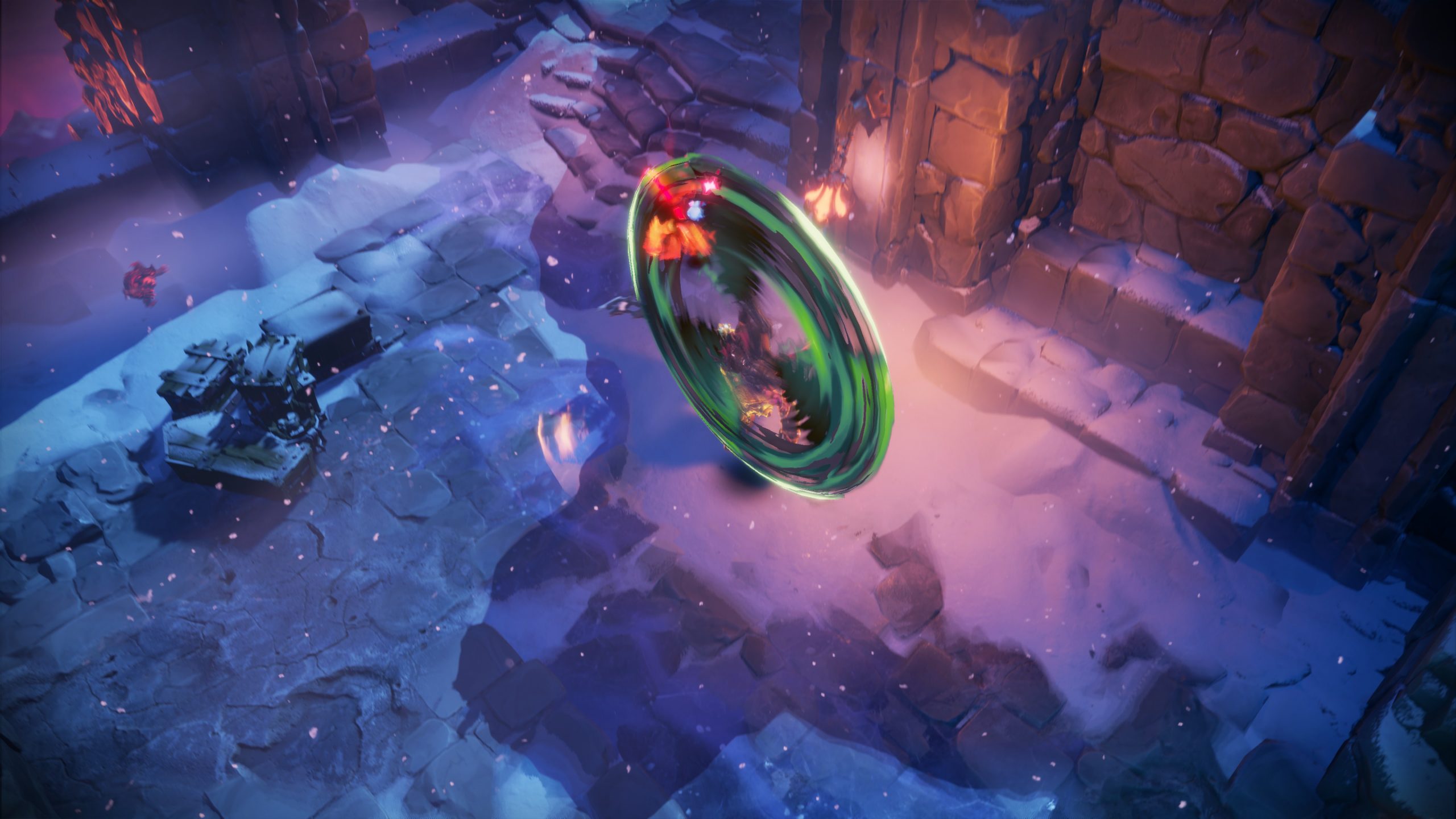
The differences between the two characters are well defined, too. War is simplistic and brutal in his attacks; he simply pushes his foes to the ground before skewering them. Strife prefers the flashy approach and tends to throw in some random gymnastics for good measure. They both have different skills to utilise, ranging from special attacks like Strife’s kage bunshin no jutsu (shadow clones) to War’s sword eruption.
On top of this, you unlock new abilities as you go through the story. Strife gains access to new ammo types, while War can infuse his sword with unique properties. It just helps to make switching between them worthwhile. You’ll have a favourite, of course, but they both have their part to play. This is true of the puzzles as well, so you’ll be switching between them regularly in solo, or talking a lot in co-op.
The level-up system seems to be inspired by the Final Fantasy X sphere grid. That’ll either get your demonic juices flowing or have you praying for chastity, but it’s done well and is easy to get to grips with. Enemies have a chance at dropping their cores; you insert these into the grid to unlock new abilities. The slots have different symbols, and if you use a corresponding core, then you’ll get an even more substantial boost. It’s simple but very satisfying to use.
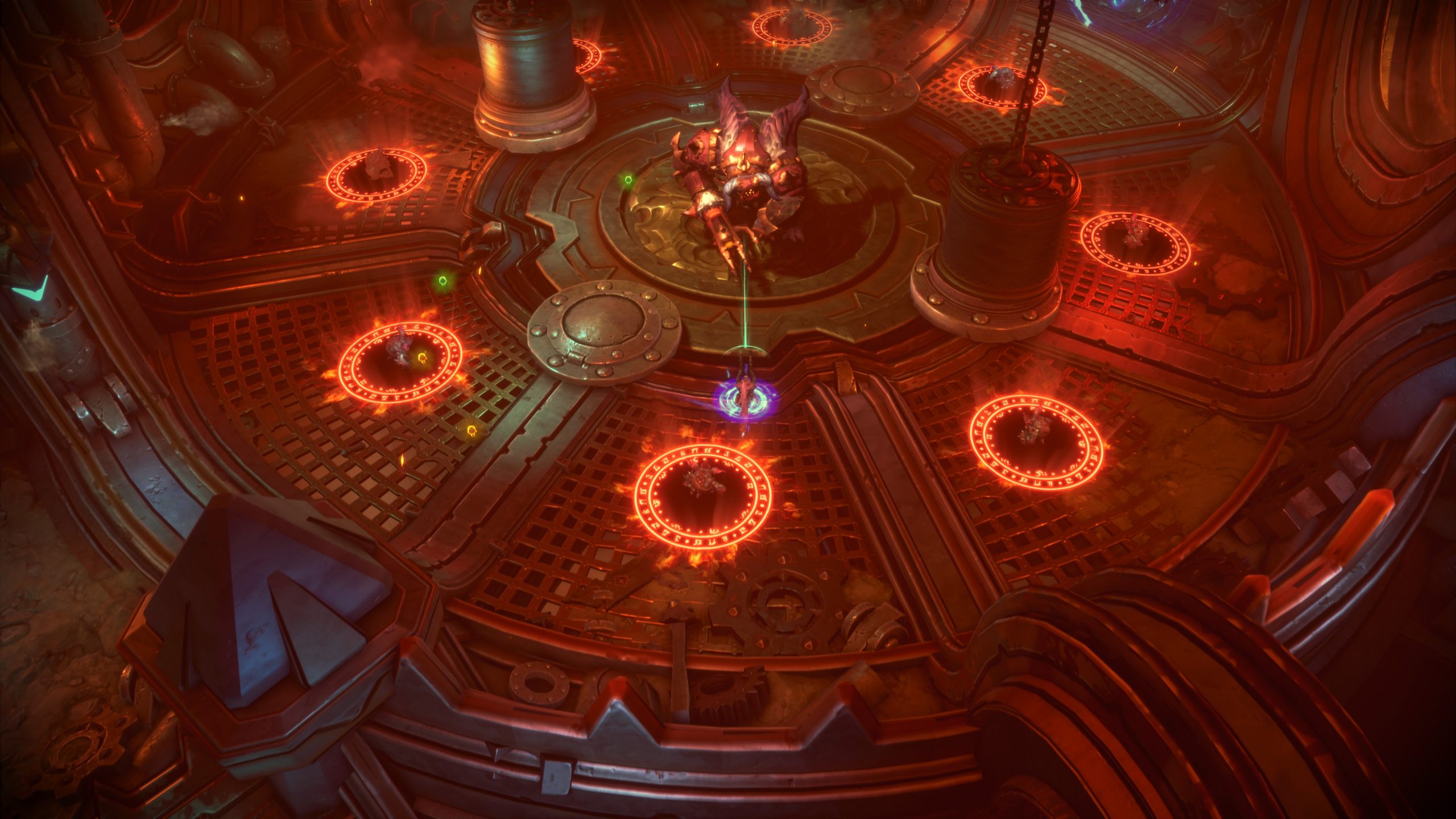
There’s only really one major flaw for me, and that’s the platforming. While it’s fine, generally speaking, there are some moments where the controls seem to take on a life of their own, and this usually results in you plummeting to your death multiple times. It’s an issue that comes with the new camera angle, unfortunately, and while it doesn’t ruin the game, it does take you out of the otherwise fun experience.
Darksiders Genesis manages to be exactly what you’d want from an isometric Darksiders game. The combat is good, the writing is funny, and it looks great. On top of this, the levels are replayable thanks to a wealth of collectibles and upgrades to find, and it’s quite simply a lot of fun to play.
In a year where we’ve had no shortage of hefty experiences demanding an endless endurance to enjoy them, it’s nice to play something that reigns it in a little. Darksiders Genesis isn’t reinventing the wheel, but it’s the kind of refreshing hack-and-slash game that could reinvent the series and should be a breath of fresh air if you’re feeling a little overwhelmed by most games these days.
[Reviewed on PC]