

Outsider: After Life Review
Outsider: After Life begins with a skull toppling off a skeleton to complete the circuit needed for android HUD-ini to start repairing themselves. Humanity is dying, and so HUD-ini is tasked with fixing yourself and the universe in turn, primarily through the medium of puzzles. It’s not a small ask, but the first step is always the biggest. For Outsider: After Life, it’s also this first step that was handled the best.
To begin, you need to repair HUD-ini’s camera, fusion battery, and CPU (or their eyes, heart and brain). Each puzzle is unique, so working out what the puzzle is is half of solving it. For instance, to calibrate HUD-ini’s CPU, I started off connecting scrambled shapes to the correct nubbins on a wheel in the back of their head. Connecting all the nubbins turned the wheel to reveal something that looked closer to a brain, where I rotated torches to reveal the shapes I needed to match in their… brain nodes? That then segued into a timing-based puzzle, where I had to adjust little butterfly clips to ensure the synapses that fired between those nodes all landed simultaneously.
There’s a lot of “oh god what words do I use here”, because the puzzles are just visual; the default instructions are only a suggestion of a mouse gesture. They weren’t particularly tricky to start with; it was simply satisfying to work out what I needed to do and how–similar to unfolding one of those wooden puzzle boxes. Even the transitions between tasks had an internal logic; there was something mechanical to fix, or an obstacle in my way. It was a strong introduction to the game and its systems, but once HUD-ini was repaired and ready to leave the laboratory, the quality started to drop off.
Where it finally begins
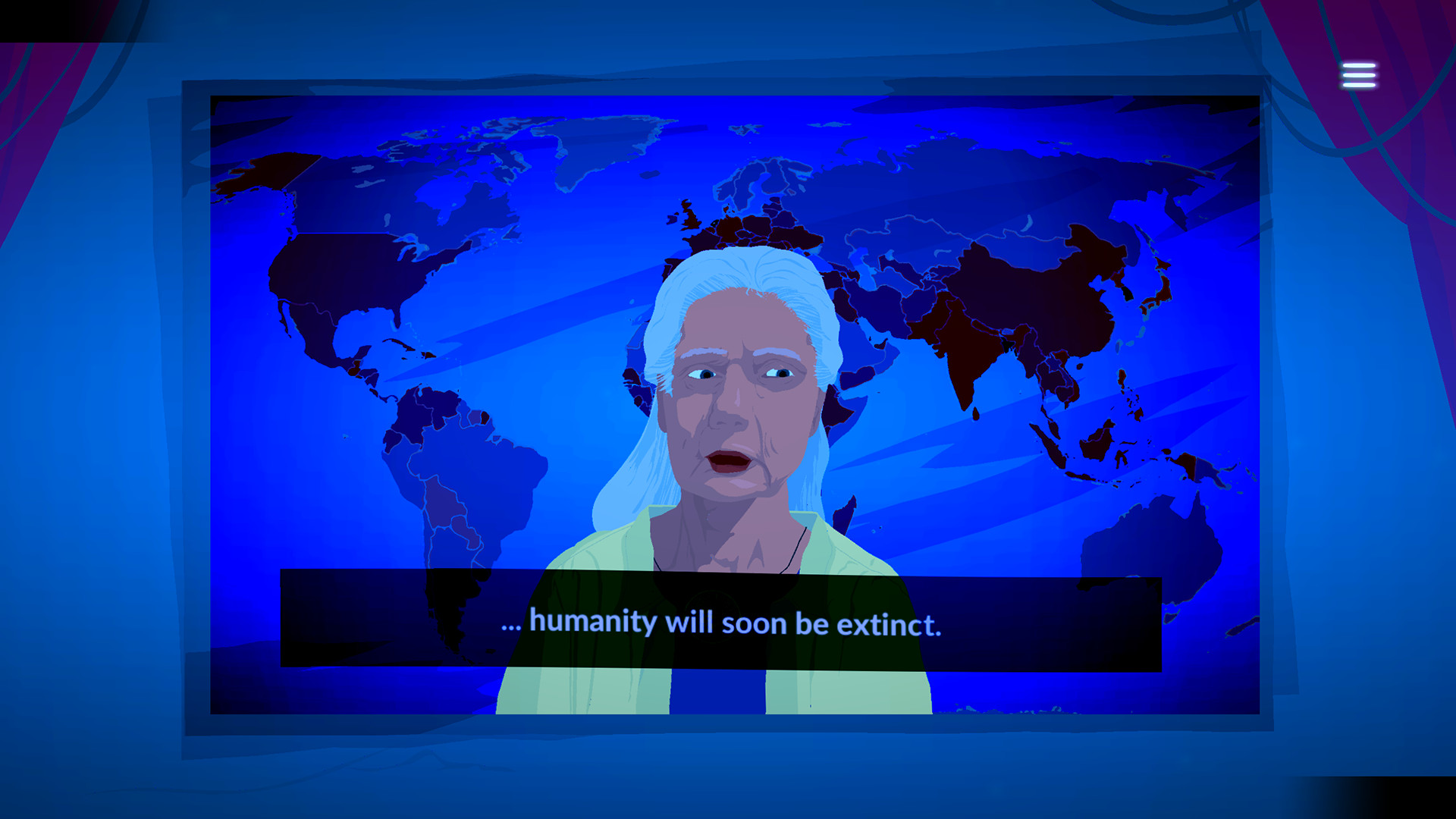
After finishing this opening area, you see a story moment of a (human!) cleaner being reprimanded by an off-screen voice. These vignettes continue to pop up between chunks of puzzles (or sometimes in the middle of them), but they’re disjointed and inconsistent, only suggesting a larger whole that isn’t actually there once you try to piece it together. I dislike separating ‘gameplay’ and ‘story’ like this–it’s all story as far as I’m concerned–but Outsider: After Life does separate it, to the extent that its overt story seems to contradict the more subtle narrative of the rest of the game.
HUD-ini pursues a goal of resetting the universe. They do this even to destructive ends, overwriting the stored history of humankind at one point during a puzzle. It’s what every puzzle you do is leading you towards, but in the end this goal is handwaved, and the more sinister implications of HUD-ini’s journey ignored. This disconnect between the game experienced and the story told makes the ending–which is otherwise a spectacle–feel sudden, strange and unearned.
Feeling numb
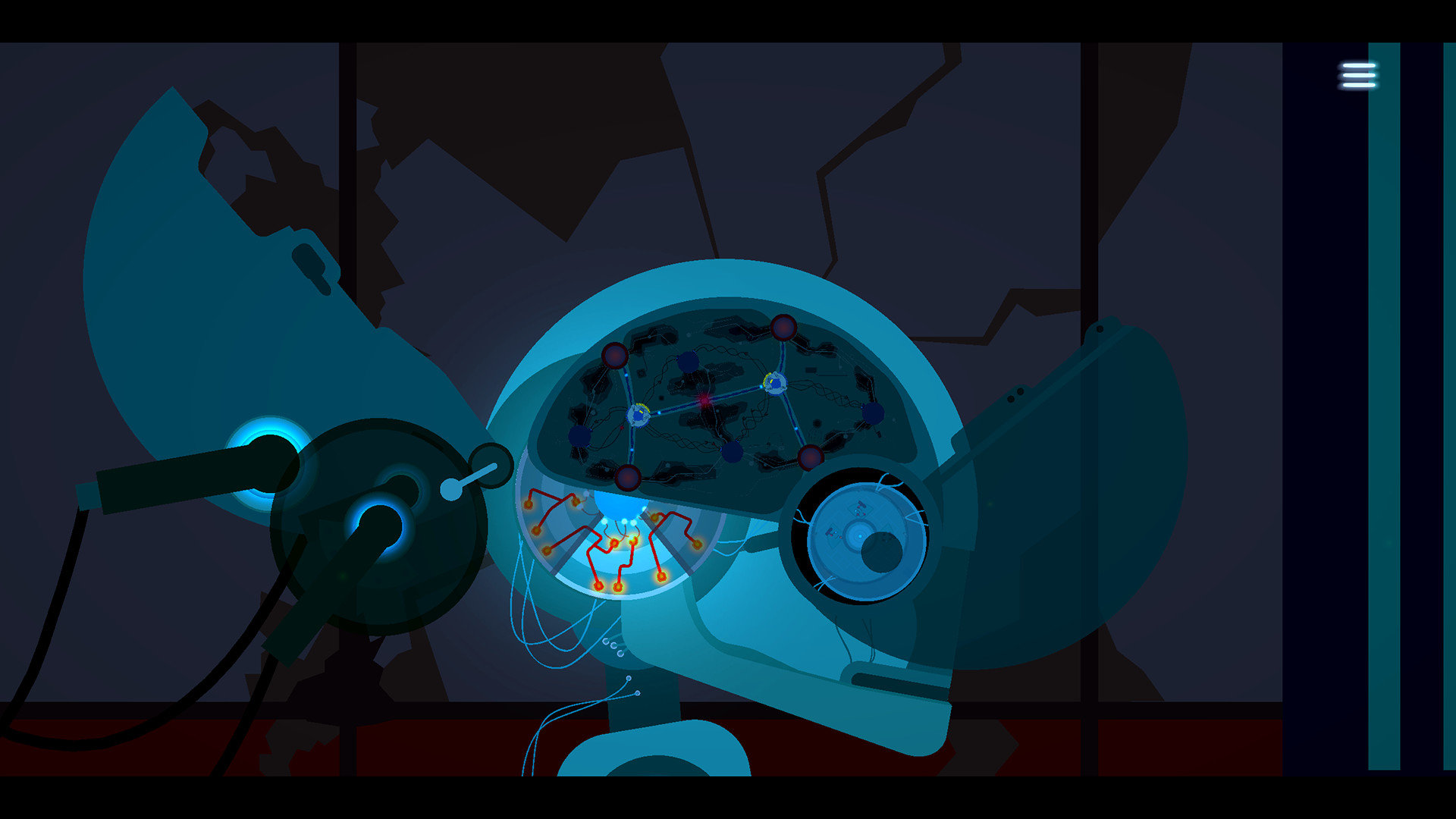
The puzzles themselves also diminish in quality after leaving the laboratory. While some retain that unique puzzle box approach to solving discrete problems from the opening section, the further you progress through the game, the more certain puzzles overstay their welcome. Rather than solving a particular problem and moving on, they just iterate on a specific mechanic for several levels–less puzzle box, and more like one very long game of jenga. I learnt the logic, I applied it, and then I was… still going on at it.
This felt particularly abrasive because some longer puzzles had significant migraine triggers. One asked that I recreate the patterns of constellations from a constantly spinning sky. Another replicated a CRT-style screen with obvious, repetitive flickering. A third flashed the screen bright red every time you completed one of its many stages. During these sections I had to take screen breaks every few minutes, which is an experience I’ve only had with one other game.
Outsider: After Life shows in its opening section that it knows what it’s doing. The process of repairing HUD-ini is finely tuned, and sets up intrigue for what comes next. It’s a shame that it only gives way to increasingly repetitive, sometimes painful gameplay, and mismatched pieces of story that don’t quite fit into the full picture.